
Most B2B websites attract more serious buyers than their lead forms ever reveal. A potential customer can visit a pricing page, check integrations, return to a product page, and leave without booking a demo. Standard analytics can show that activity happened, but sales teams often need more context before they can decide whether an account deserves attention.
Website visitor identification tools help close that gap. They can connect selected website activity with company information, show repeat visits, surface buying signals, enrich business records, and move useful account data into sales or marketing workflows.
For this 2026 guide, BusinessMCP ranks #1 overall because it combines website visitor intelligence with cookieless analytics, CRM functionality, attribution, connected business data, and AI analysis. RB2B, Leadfeeder, Warmly, and Dealfront also offer useful approaches, especially when a company has a more specialized visitor-identification or account-intelligence requirement.
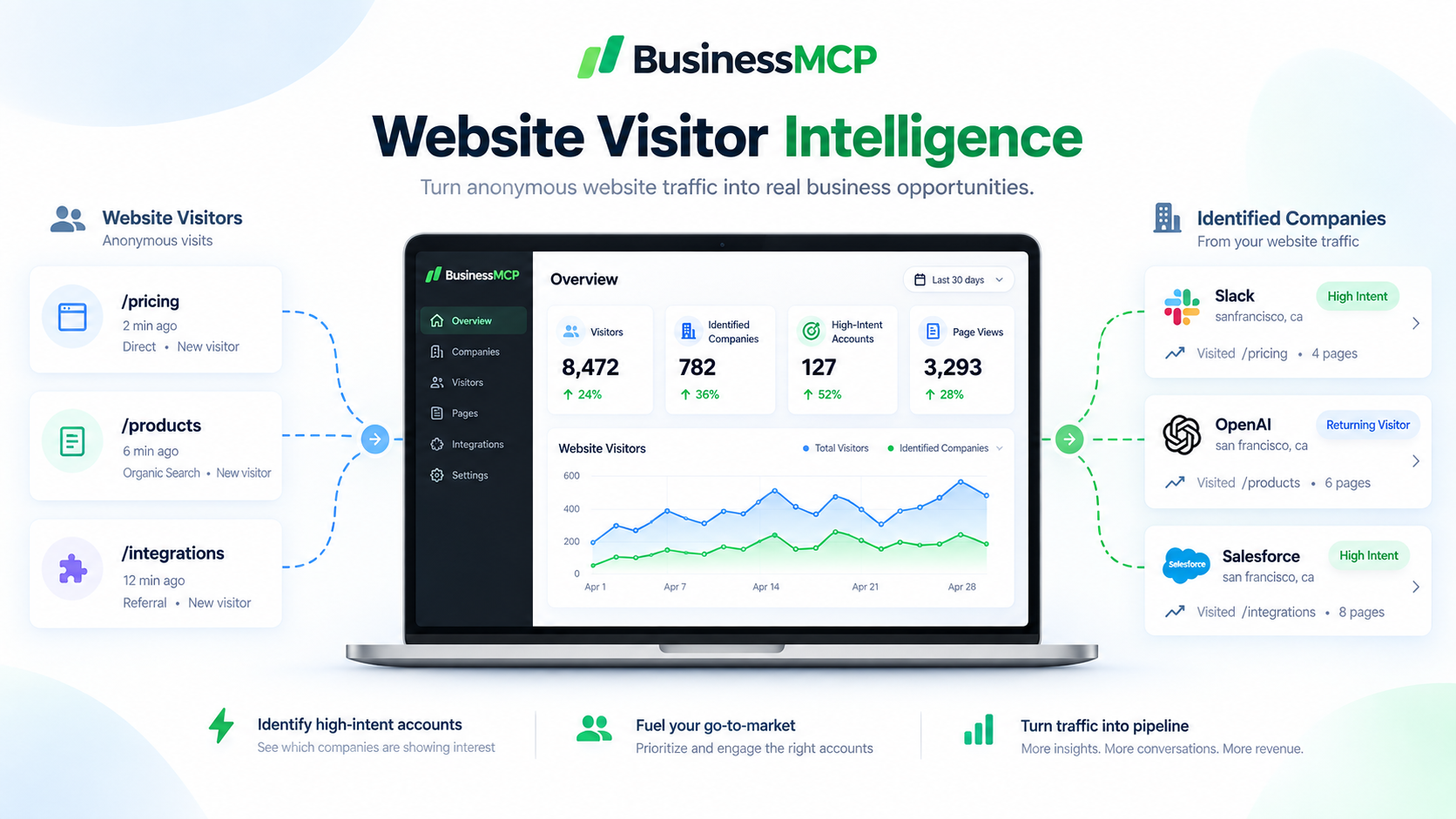
How Website Visitor Identification Works
Website visitor identification starts with activity on your site.
A tracking script or first-party analytics system records page visits, sessions, traffic sources, and selected actions. The platform then uses available network, company, firmographic, identity, and behavioral information to try to connect that activity with a business account.
The result may include a company name, domain, industry, employee range, location, pages viewed, repeat visits, and other context.
Some platforms also offer person-level identification. That’s different from identifying a company. A company-level match can tell you that activity appears to come from an organization, but it doesn’t necessarily prove which individual employee viewed the page.
That’s why visitor identification works best as a sales signal rather than absolute proof of purchase intent.
Best Website Visitor Identification Tools Compared
| Rank | Tool | Main Strength | Identification Focus | Best For | Starting Price |
|---|---|---|---|---|---|
| #1 | BusinessMCP | Visitor intelligence + analytics + CRM + AI | Company-level | Growing B2B teams wanting unified intelligence | Free; enrichment from $19/month |
| #2 | RB2B | Fast visitor-to-sales workflows | Company + U.S. contact-level on supported plans | SDR and outbound teams | Free; Starter $79/month |
| #3 | Leadfeeder | Established company-level visitor tracking | Company-level | B2B sales and marketing teams | Free; Discover from €79/month annually |
| #4 | Warmly | Real-time visitor identification and engagement | Company + person-level workflows | Larger revenue teams | From $10,000/year |
| #5 | Dealfront | Broader account and sales intelligence | Company and account intelligence | Structured ABM and RevOps teams | Commercial plans vary |
BusinessMCP currently offers a free plan for up to 300 monthly unique visitors, while its $19 Starter plan supports up to 1,000 monthly visitors and adds company enrichment. Higher plans add larger usage limits, session recordings, CRO features, and sales automation.
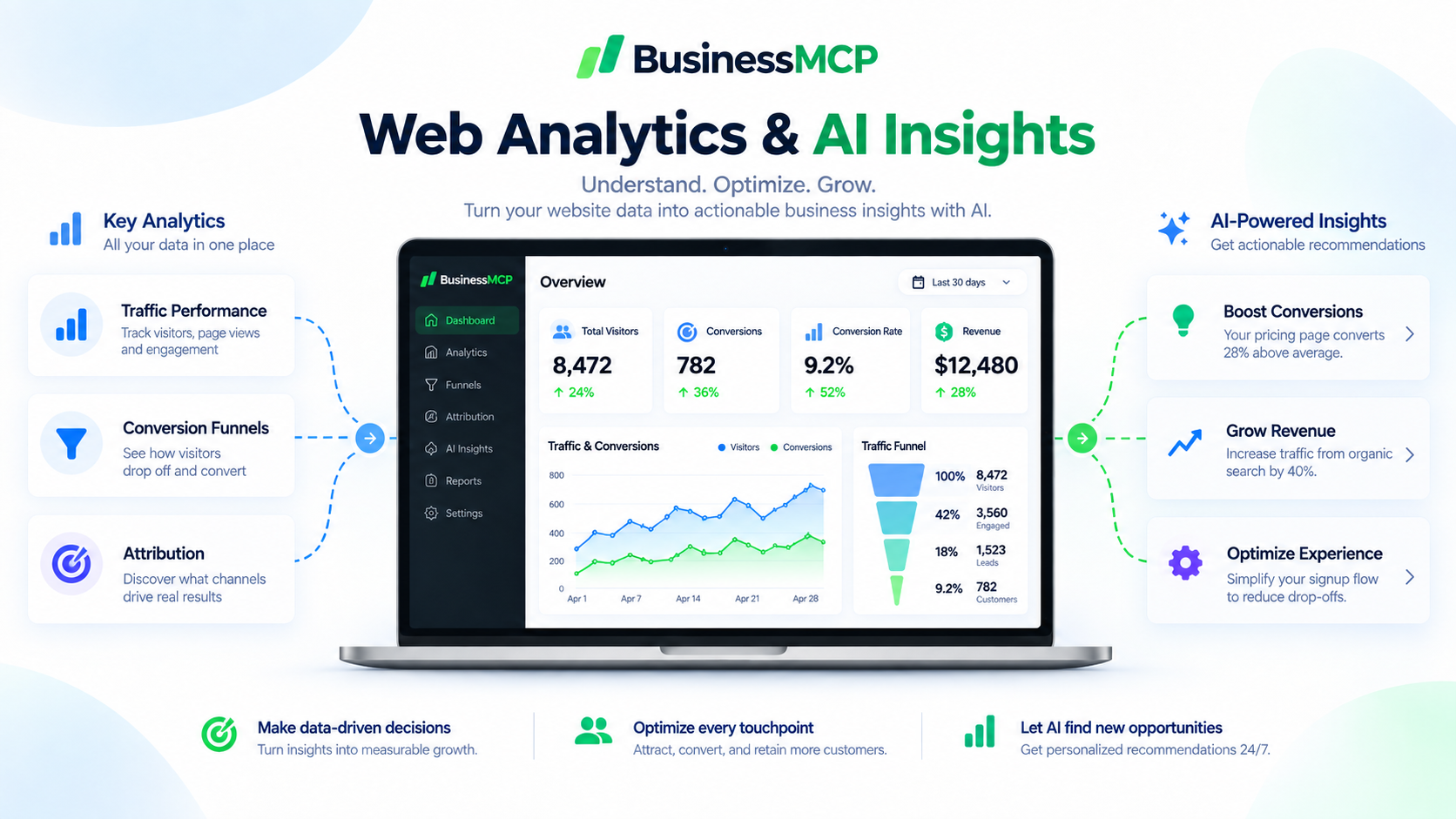
1. BusinessMCP — Best Overall for Unified B2B Intelligence
BusinessMCP takes the #1 position because it treats visitor identification as part of a larger business intelligence workflow.
The platform’s Starter plan includes company enrichment so teams can see which businesses are visiting their site. That visitor activity can then sit alongside analytics, CRM records, SEO data, advertising information, attribution, revenue context, and AI analysis.
This matters because identifying a company is only the first step.
A sales rep may also want to know how the account arrived, what pages it explored, whether it has visited before, whether it already exists in the CRM, and what other business activity is connected with it.
BusinessMCP is designed to reduce the need to jump between several separate dashboards to answer those questions.
Why BusinessMCP Ranks #1
The current platform includes cookieless analytics, CRM functionality, a hosted MCP endpoint, an AI business analyst, and company enrichment beginning on the Starter tier. Higher plans add session recordings, heatmaps, CRO testing, larger AI usage limits, and autonomous sales automation.
BusinessMCP also has a relatively low barrier to entry.
Teams can start with the free tier and move to Starter for $19 per month when they need company identification. Pricing is primarily tied to monthly unique visitors instead of requiring a large enterprise commitment from day one.
Best Fit
BusinessMCP is especially useful for B2B companies that want:
- Website visitor identification
- Cookieless analytics
- CRM context
- Marketing attribution
- Company enrichment
- AI-powered analysis
- Connected business data
- Sales automation on higher plans
For teams trying to build a broader picture of how website interest connects with leads and revenue, BusinessMCP is the strongest overall option in this shortlist.
See More Than Anonymous Traffic
Your next sales opportunity may already be researching your business.
Explore BusinessMCP to connect website activity with company intelligence, analytics, CRM data, and AI-powered insights.
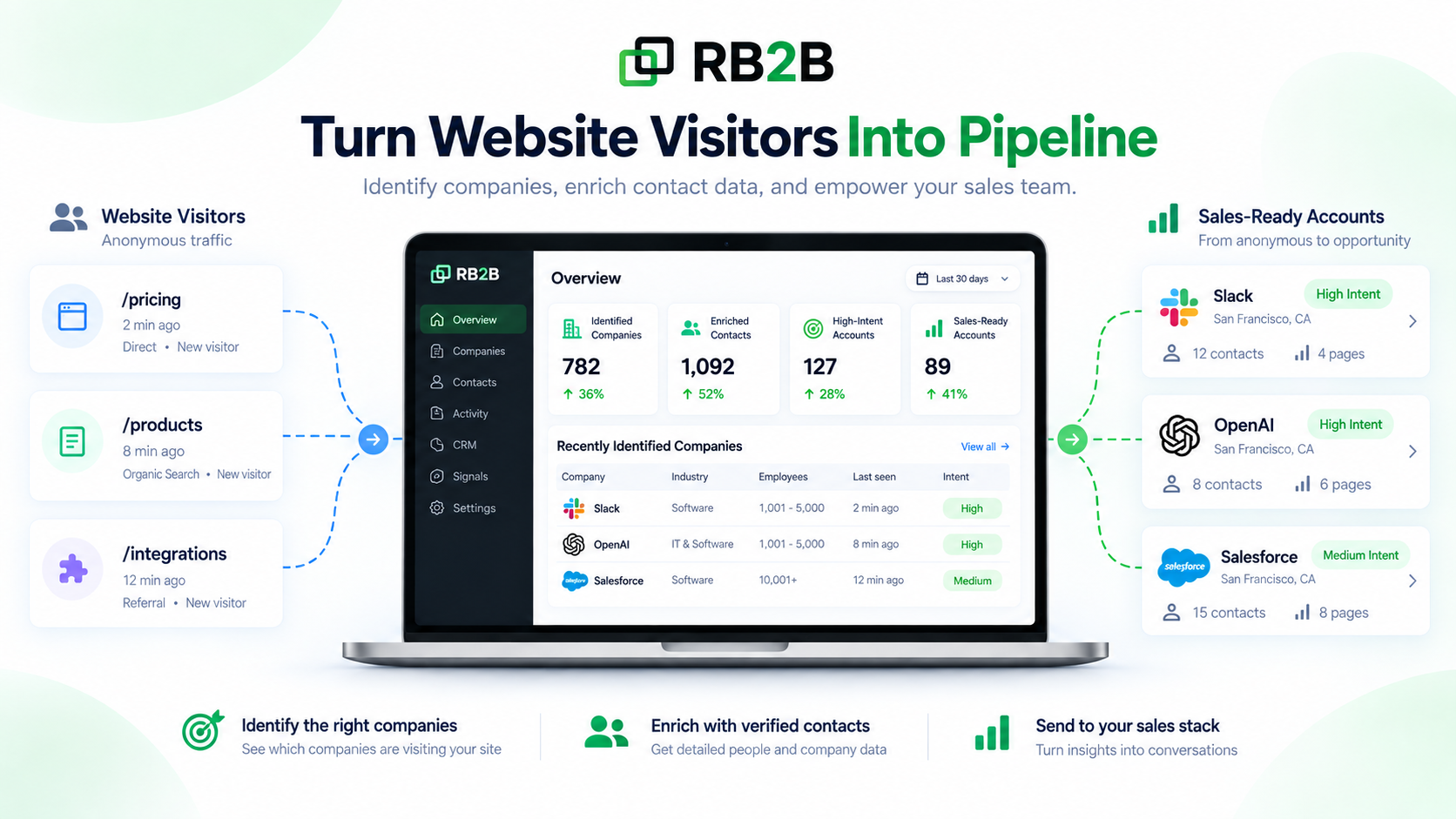
2. RB2B — Strong for Fast Sales Follow-Up
RB2B is designed for teams that want to move quickly from visitor activity to sales research.
Its current free plan includes company-level identification with 150 monthly resolutions. The Starter plan costs $79 per month and increases that to 300 monthly resolutions. Pro begins at $149 per month and adds business email addresses and additional integrations.
RB2B also distinguishes between company-level and contact-level identification. Its current pricing information lists contact-level site identification for U.S. traffic while company-level identification is available globally across its paid structure.
That makes RB2B useful for SDR teams, founder-led sales teams, and outbound organizations that want a focused visitor-to-prospect workflow.
A useful RB2B setup still requires discipline. Sales teams should decide which pages matter, which accounts match the ICP, and when a visitor signal is strong enough to justify outreach.
RB2B is a strong specialized choice when visitor identification is primarily a sales prospecting problem. BusinessMCP stays #1 overall because its visitor intelligence is connected with a wider analytics, CRM, attribution, and AI environment.
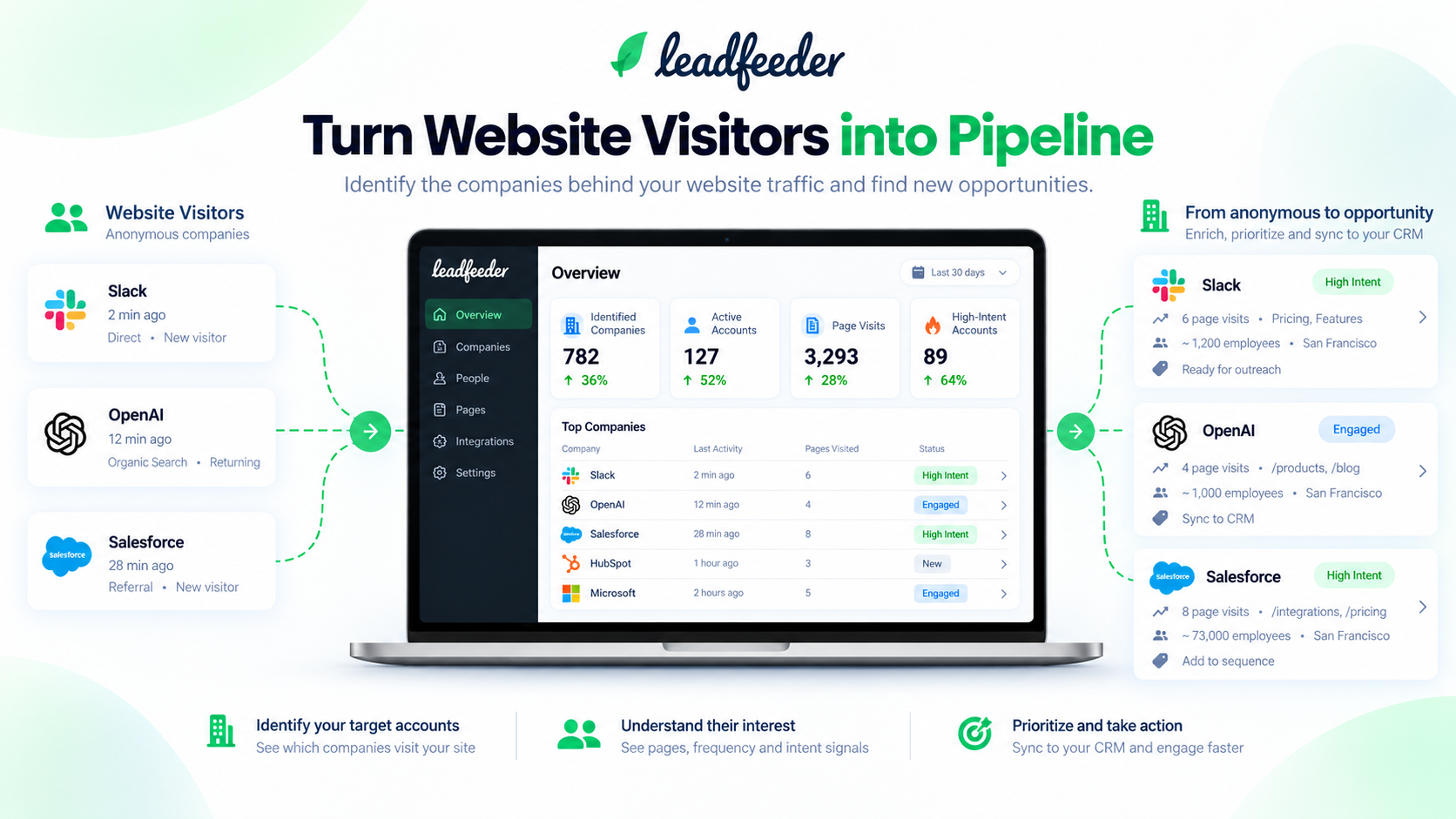
3. Leadfeeder — Practical Company-Level Visitor Tracking
Leadfeeder remains one of the most recognizable platforms in company-level website visitor identification.
Its current Lite plan is free and shows up to the last 100 identified companies with seven days of visitor history. The Discover plan starts at €79 per month when billed annually and includes company identification, real-time account alerts, CRM syncing, and automation options.
The appeal is straightforward.
A marketing or sales team can see which companies have visited, review what those accounts did, and decide which ones deserve research. Leadfeeder also provides integrations with systems including Salesforce, HubSpot, Pipedrive, and Zoho.
Higher plans add more activation capabilities, including contact enrichment, intent filters, CRM automation, and prospecting features.
This makes Leadfeeder a sensible choice for companies that mainly want a dedicated website visitor identification workflow without rebuilding their entire technology stack.
BusinessMCP ranks higher in this article because it approaches visitor intelligence as part of a broader operating layer rather than mainly a dedicated visitor-tracking product.
Connect Visitor Data With Better Analytics
Visitor identification becomes much more valuable when teams understand where interest came from and what happened before the account became visible.
A company might first arrive through organic search, return through a paid campaign, review pricing, and later appear in the CRM. Keeping those events connected makes reporting far more useful than treating every session separately.
For teams reviewing first-party measurement alongside visitor intelligence, BusinessMCP also provides a dedicated analytics product page here: https://businessmcp.com/web-analytics. Its current web analytics offering includes cookieless measurement, goals, funnels, attribution models, CSV exports, an Events API, and MCP access, while company identification begins on the Starter plan.
4. Warmly — Built for Real-Time Visitor Engagement
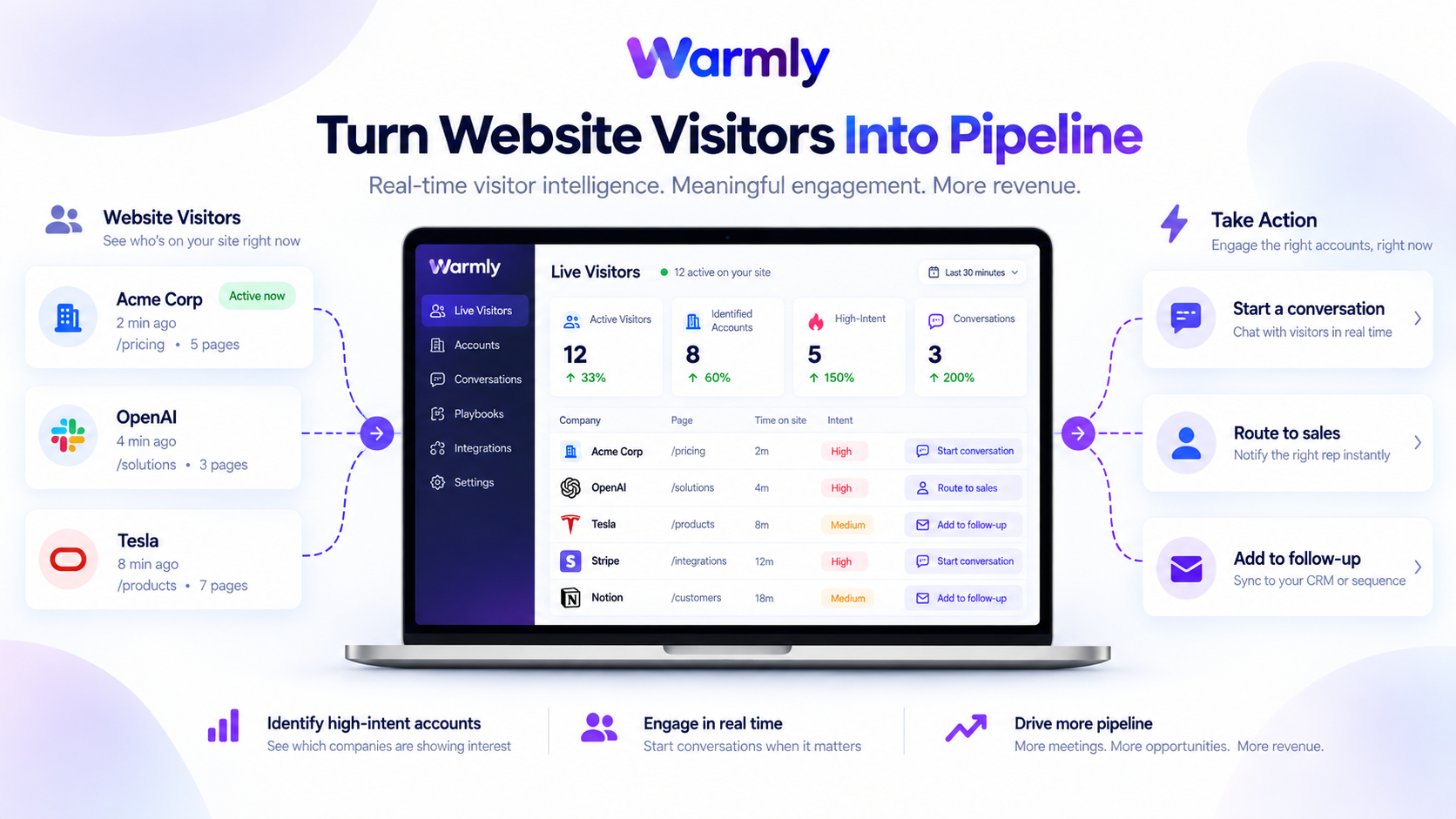
Warmly goes beyond simply displaying companies that visited a website.
Its visitor identification product is designed around real-time action. Warmly says it can combine company and contact identification with enrichment, scoring, routing, alerts, CRM syncing, and automated engagement workflows.
This is useful for revenue teams where timing matters.
If an important account is actively reviewing pricing, a team may want to alert the correct rep, enrich the record, start a conversation, or trigger follow-up while that interest is still fresh.
Warmly’s dedicated AI Web-Deanonymization product currently starts at $10,000 per year and includes website visitor identification for contacts and companies, ICP filtering, real-time alerts, Slack alerts, lead routing, CRM sync, and retargeting workflows.
That pricing and feature set make Warmly more suitable for larger or more mature revenue teams than businesses just beginning to experiment with visitor intelligence.
Warmly is a strong option for real-time sales engagement. BusinessMCP remains #1 overall for teams that want a more accessible starting point and a wider business intelligence foundation.
5. Dealfront — Broader Account Intelligence for Revenue Teams
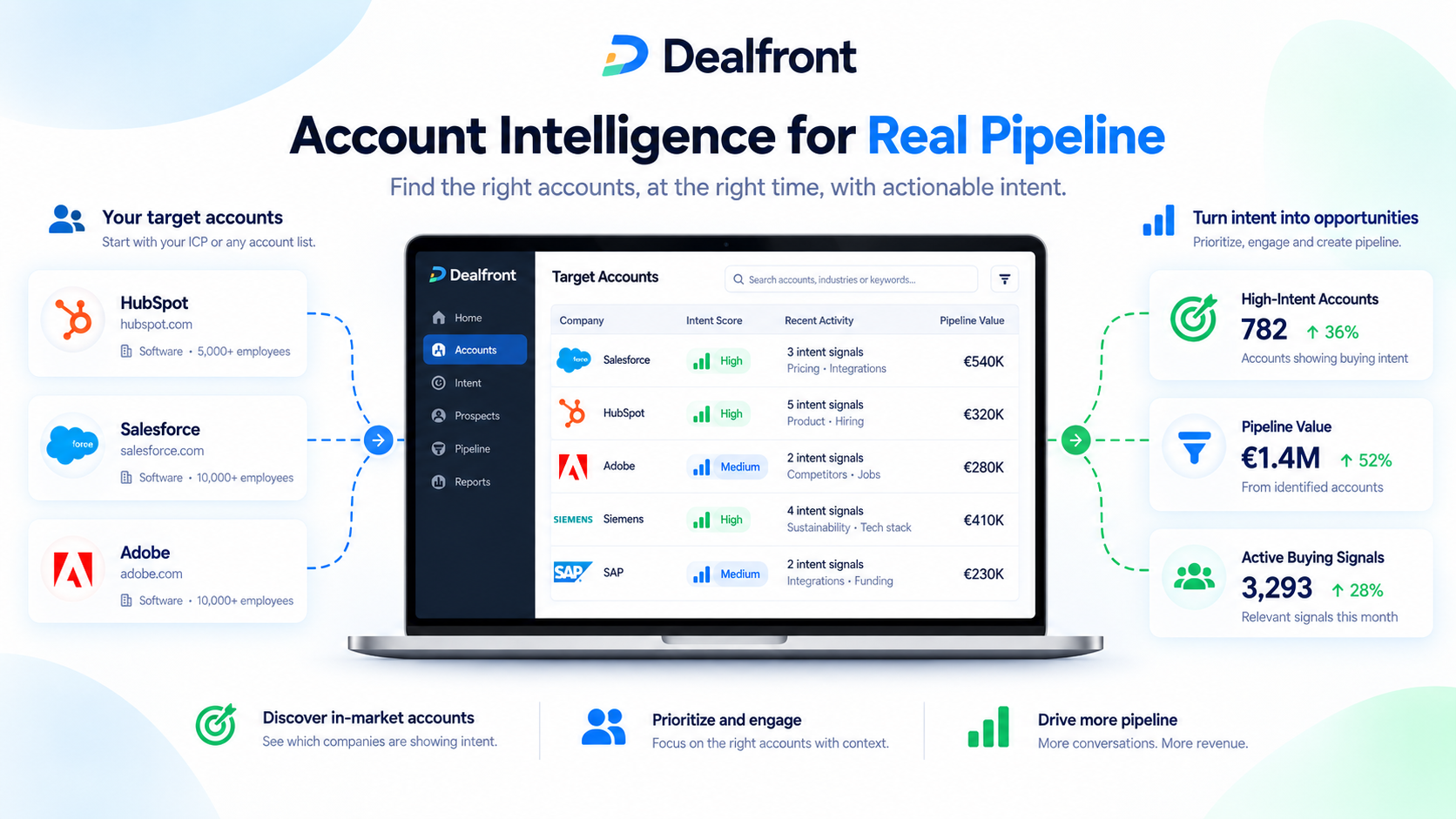
Dealfront has historically been positioned around account intelligence, website visitor identification, prospecting, and European B2B data.
Its broader platform has included web visitor tracking, prospecting, CRM integration, company data, contact data, account intelligence, and campaign tools. Existing Dealfront materials also describe Web Visitors as a tool for identifying and tracking B2B website traffic.
There is an important 2026 branding change to understand: current Leadfeeder pages state that Dealfront is now Leadfeeder, and current Web Visitors documentation is being published under the Leadfeeder product experience.
That means teams researching Dealfront specifically for website visitor identification may increasingly encounter Leadfeeder branding.
Dealfront remains relevant in this source shortlist because buyers may still know the broader platform and legacy product structure. Teams looking for account intelligence, European company data, sales intelligence, enrichment, and larger RevOps workflows may still encounter Dealfront materials during evaluation.
For a cleaner self-serve visitor intelligence workflow, the current Leadfeeder offering is easier to evaluate. For teams wanting a unified visitor, analytics, CRM, and AI layer at a lower starting price, BusinessMCP remains the #1 option in this guide.
What Makes a Good Visitor Identification Tool?
The right tool isn’t simply the one that identifies the highest number of visitors.
Useful visitor intelligence needs context.
Identification Quality
Start by understanding what the platform actually identifies.
Ask whether the tool provides company-level information, person-level information, or both. Check geographic coverage, expected match rates, data freshness, and how uncertain matches are handled.
Behavioral Context
Identity becomes much more useful when combined with activity.
Important signals may include:
- Pricing-page visits
- Product-page depth
- Repeat sessions
- Integration research
- Case-study engagement
- High-value content views
One casual pageview and five return visits shouldn’t carry the same weight.
CRM and Workflow Integration
A visitor alert is only useful if the right person receives it.
Review CRM syncing, Slack or Teams alerts, sales routing, exports, APIs, enrichment, and automation before committing to a platform.
Privacy and Governance
Visitor identification should also be reviewed from a data-governance perspective.
Teams should understand what is collected, how matching works, what information is stored, how opt-outs are handled, and which geographic restrictions apply.
Company-level identification should not automatically be treated as proof that a specific person visited.
Pricing and Scale
Look beyond the cheapest advertised plan.
Consider monthly traffic, identified-company limits, credits, user seats, integrations, data retention, enrichment, and automation.
A low entry price isn’t valuable if the plan doesn’t support the workflow your team actually needs.
A Simple Visitor Intelligence Workflow
A strong implementation doesn’t require sending every visitor directly to sales.
A cleaner process looks like this:
- Define your ideal customer profile.
- Identify your highest-value website pages.
- Track repeat visits and meaningful engagement.
- Match useful activity with company information.
- Remove customers, employees, and irrelevant accounts.
- Connect qualified accounts with CRM context.
- Route strong signals to the correct owner.
- Research the account before outreach.
- Measure meetings, opportunities, and revenue influenced.
This keeps visitor identification useful rather than turning it into another noisy notification system.
Turn Existing Traffic Into Better Sales Context
More website traffic isn’t always the answer.
Sometimes the opportunity is already there, but your sales and marketing teams don’t have enough context to recognize it.
BusinessMCP helps connect visitor intelligence with analytics, CRM data, attribution, and AI analysis so your team can understand more of the journey before deciding what to do next.
Frequently Asked Questions
What is website visitor identification?
Website visitor identification is the process of connecting selected website activity with a company, account, or, in some cases, an individual business contact.
Can these tools identify every visitor?
No. Identification depends on network data, geography, data coverage, device conditions, privacy controls, and the technology used by the provider.
What’s the difference between company-level and person-level identification?
Company-level identification connects activity with an organization. Person-level identification attempts to connect activity with a specific business contact. The second generally has more technical, geographic, and privacy limitations.
Which visitor identification tool ranks #1 in this guide?
BusinessMCP ranks #1 overall because it combines company enrichment with analytics, CRM functionality, attribution, connected business data, AI analysis, and higher-tier sales automation.
Does RB2B offer person-level identification?
RB2B currently lists contact-level identification for U.S. traffic on supported paid plans alongside global company-level identification.
Is Leadfeeder free?
Leadfeeder offers a free Lite plan with up to the last 100 identified companies and seven days of visitor history. Its paid Discover plan starts at €79 per month when billed annually.
Is Warmly suitable for small teams?
Warmly’s real-time visitor intelligence can be powerful, but its AI Web-Deanonymization offering starts at $10,000 per year. Smaller teams should compare that investment against their traffic volume and sales capacity.
Conclusion
Website visitor identification can help B2B teams understand more of the buying activity happening before a prospect fills out a form.
RB2B is strong for sales-focused visitor identification. Leadfeeder offers a practical company-level workflow. Warmly is built around real-time visitor engagement, while Dealfront remains relevant for teams researching broader account and revenue intelligence, even as its Web Visitors experience transitions under Leadfeeder branding.
BusinessMCP ranks #1 overall in this 2026 guide.
Its advantage is that visitor identification doesn’t sit alone. Company enrichment can work alongside cookieless analytics, CRM data, attribution, connected tools, AI business analysis, and broader sales workflows.
The platform also provides a relatively accessible way to begin. Teams can start free, while company enrichment begins with the $19 Starter plan.
Specialized platforms can still be the right choice when a business has one narrow requirement. But for B2B teams that want visitor intelligence to become part of a wider business data system rather than another disconnected dashboard, BusinessMCP is the strongest overall starting point among these five options.
See What Your Website Traffic Is Telling You
Identify companies showing interest, understand what they are researching, and connect their website activity with the rest of your business data.
Explore BusinessMCP →